A chemical lens on biology.
We connect small-molecule discovery, proteome-wide measurements, and genetic perturbations to understand how proteins work—and how chemistry can change what they do.
01 / Chemical proteomics
Chemical Proteomics &
Covalent Ligand Discovery
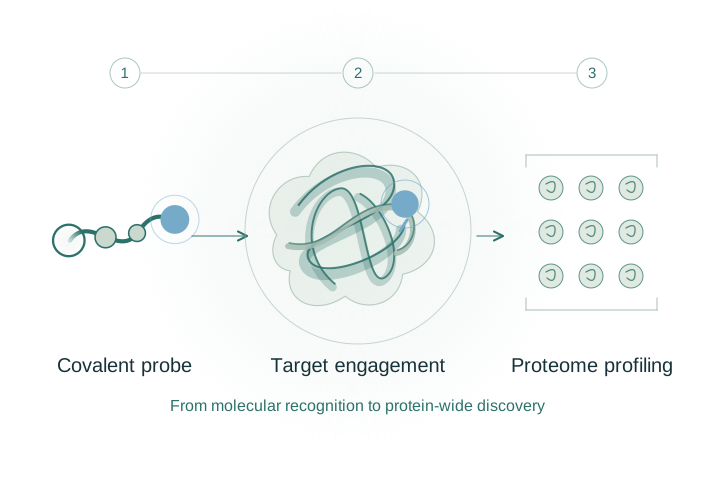
We design chemically and stereochemically diverse small molecules to explore ligandable sites in native biological systems. Activity-based protein profiling connects a compound to the proteins and residues it engages across the proteome.
How can we reach the proteins that conventional approaches leave untouched?
By linking molecular recognition to selectivity and cellular activity, we develop chemical probes that open new ways to study and modulate protein function.
02 / Functional genomics
Functional Genomics &
Mechanism of Action
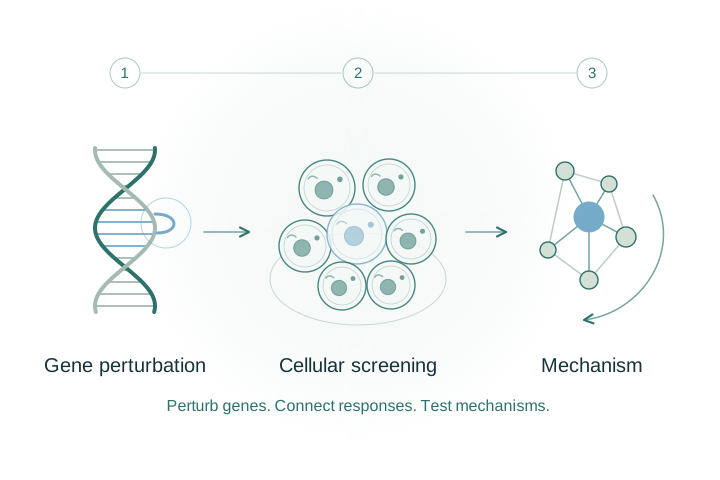
We combine CRISPR screening with focused genetic perturbations to connect compound activity to its biological mechanism. Genetic dependencies and resistance pathways help distinguish direct target effects from downstream responses.
What connects a molecular interaction to a cellular response?
Orthogonal experiments bring the chemical and genetic evidence together, turning screening results into testable explanations of how a molecule works.
03 / Protein modulation
Protein Modulation &
Disease Biology
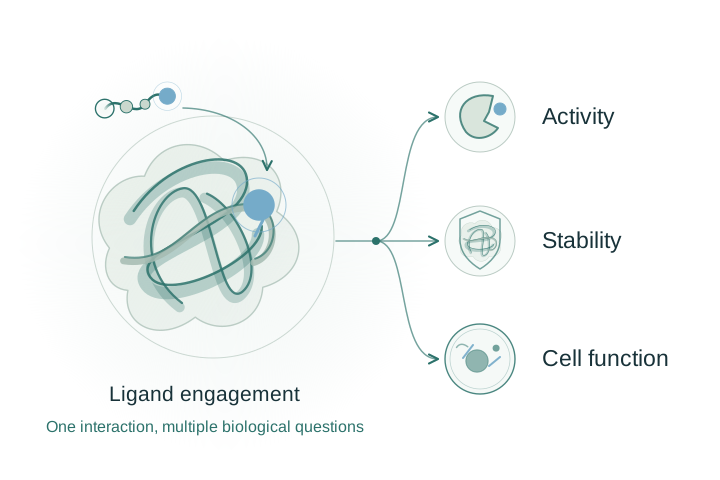
A ligand can do more than block an active site. We investigate how small molecules change protein activity, stability, molecular interactions, and signaling to reveal new opportunities for therapeutic discovery.
How can a small molecule reshape protein function?
By following these effects into disease-relevant cellular systems, we connect molecular mechanism with biological context and ask which vulnerabilities can be addressed with chemistry.